
Rubber vs. Metal Bow Banana Rollers: Which Is Better?
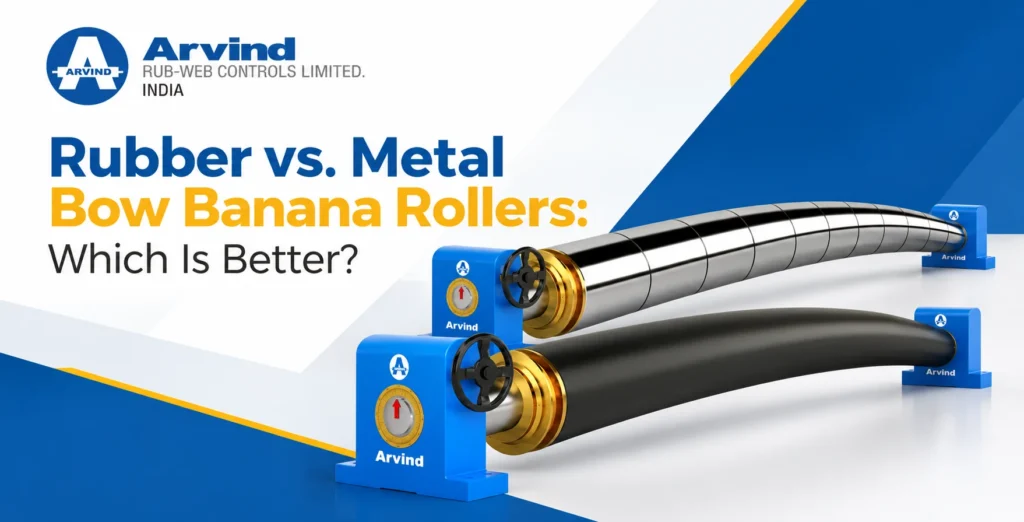
Web wrinkles, creases and slack edges lead to rejected rolls, unplanned downtime and wasted material. The most common fix is a bow banana roller, but buyers keep asking one question before they order: should the roller be rubber-covered or metal? There is no single winner. The right choice depends on your web material, line speed, tension and operating environment. This guide compares both types side by side so you can decide with confidence. What Are Bow Banana Rollers? Bow banana rollers are curved rollers, shaped like a shallow arc, that spread a moving web outward from the centre toward the edges. As the web wraps around the curve, it is stretched sideways, which removes wrinkles and keeps the material flat before it reaches printing, coating, laminating or slitting. You may also hear them called a banana roller, wrinkle remover roller or bow expander roller. All describe the same principle: a curved fixed axis with a rotating outer surface that spreads the web. Some lines also use a variable bow roller, where the bow angle can be adjusted for different materials. These rollers are widely used in paper mills, slitter rewinders and pop reel sections, as well as in textile, packaging and film lines. The outer surface is where rubber and metal versions differ, and that difference decides how the roller behaves on your line. How a Bow Banana Roller Removes Wrinkles The curved axis makes the web travel a longer path at its edges than at its centre. This gentle sideways pull removes baggy centres, slack edges and creases before they reach the next process. For this to work, the roller surface must grip the web enough to transfer the spreading force without slipping, yet stay gentle enough not to damage it. That balance between grip and surface protection is exactly why the rubber-versus-metal decision matters. Rubber Bow Banana Rollers Rubber bow banana rollers use a bowed core covered with a rubber sleeve, often with a smooth or grooved finish. The soft surface makes them a popular choice for general-purpose web spreading. Advantages Better grip: The rubber surface holds the web firmly, so spreading works even at low tension. Gentle on sensitive materials: Suitable for thin films, foils, coated paper and laminates that scratch easily. Quieter operation: Less noise and vibration at higher speeds. Good for slippery webs: Reduces slip on smooth or treated films. Limitations Wear over time: The rubber cover can wear, harden or crack, especially with heat, solvents or abrasive webs. Chemical sensitivity: Some rubber compounds degrade with certain inks, solvents or cleaning agents. Periodic replacement: The cover may need re-covering during the roller’s life. Metal Bow Banana Rollers Metal bow banana rollers use a steel or aluminium shell, often with a hard-chrome or similar finish, over a curved core. They are built for durability and precision, especially on high-speed paper and textile lines. Advantages Long service life: Resistant to wear, heat and most chemicals. Dimensional stability: The surface holds its shape for consistent performance. Low maintenance: No rubber cover to age, crack or replace. Suitable for demanding environments: Works well in high-heat drying and coating sections. Limitations Lower grip: Smooth metal can slip on low-friction films. Risk of surface marking: Hard surfaces can scratch delicate coatings or soft substrates. Finish selection matters: The surface must suit your web, or slippage and marking can follow. Rubber vs. Metal: Side-by-Side Comparison Factor Rubber Bow Banana Roller Metal Bow Banana Roller Web grip High Moderate to low Surface protection Gentle on delicate webs Can mark soft or coated surfaces Wear resistance Moderate Excellent Heat and chemical resistance Depends on rubber compound High Maintenance Cover replacement over time Minimal Noise and vibration Lower Moderate Best for Films, foils, thin paper, laminates Heavy-duty, high-heat, long-run lines Where Each Type Works Best Rubber rollers suit flexible packaging, plastic films, laminates, foils, thin papers and textile fabrics, where grip and gentle contact protect the material. Metal rollers suit paper machines, slitter rewinders, drying sections and other hot, high-speed or chemically demanding environments, where a long-lasting surface matters most. Metal expander rollers are often chosen as a low-maintenance alternative to rubber bow rollers. How to Choose the Right Wrinkle Remover Roller Ask these five questions before you decide: What is your web material? Thin films, foils and coated stock usually do better with rubber. Tough papers, boards and metallised webs can handle metal. What are your operating conditions? High temperatures, solvents and aggressive cleaning favour metal or specially formulated rubber. How much tension do you run? Low-tension lines benefit from the extra grip of rubber. How long are your production runs? Continuous, long-run operations favour the durability of metal. Is surface quality critical? If scratches or marks are unacceptable, choose a soft rubber surface. Which Is Better for Your Line? Choose rubber when you run delicate, slippery or thin webs and need strong spreading without surface damage. Choose metal when durability, heat resistance and low maintenance matter more than grip. Consider a combination: Many lines use a rubber bow expander roller where spreading is critical and metal rollers elsewhere for guiding and support. The best result comes from matching the roller to the application, not from picking one material for everything. If you are unsure, a manufacturer can recommend a design based on your web width, speed and material, and customise the diameter, length and bow to suit your machine. Common Mistakes to Avoid Choosing by material alone: Match the roller to the web, speed and process, not just rubber or metal. Ignoring the bow angle: A roller set too steep or too shallow can cause marking or leave wrinkles in place. Skipping cleaning: Ink, adhesive and coating build-up reduces grip on any surface. Wrong roller length: A roller too short for the web cannot spread the edges properly. Maintenance Tips for Longer Roller Life Clean the roller surface regularly with a compatible, non-aggressive cleaner. Inspect rubber covers for cracks, hardening or glazing. Check bearings and the curved axis alignment during scheduled maintenance.