
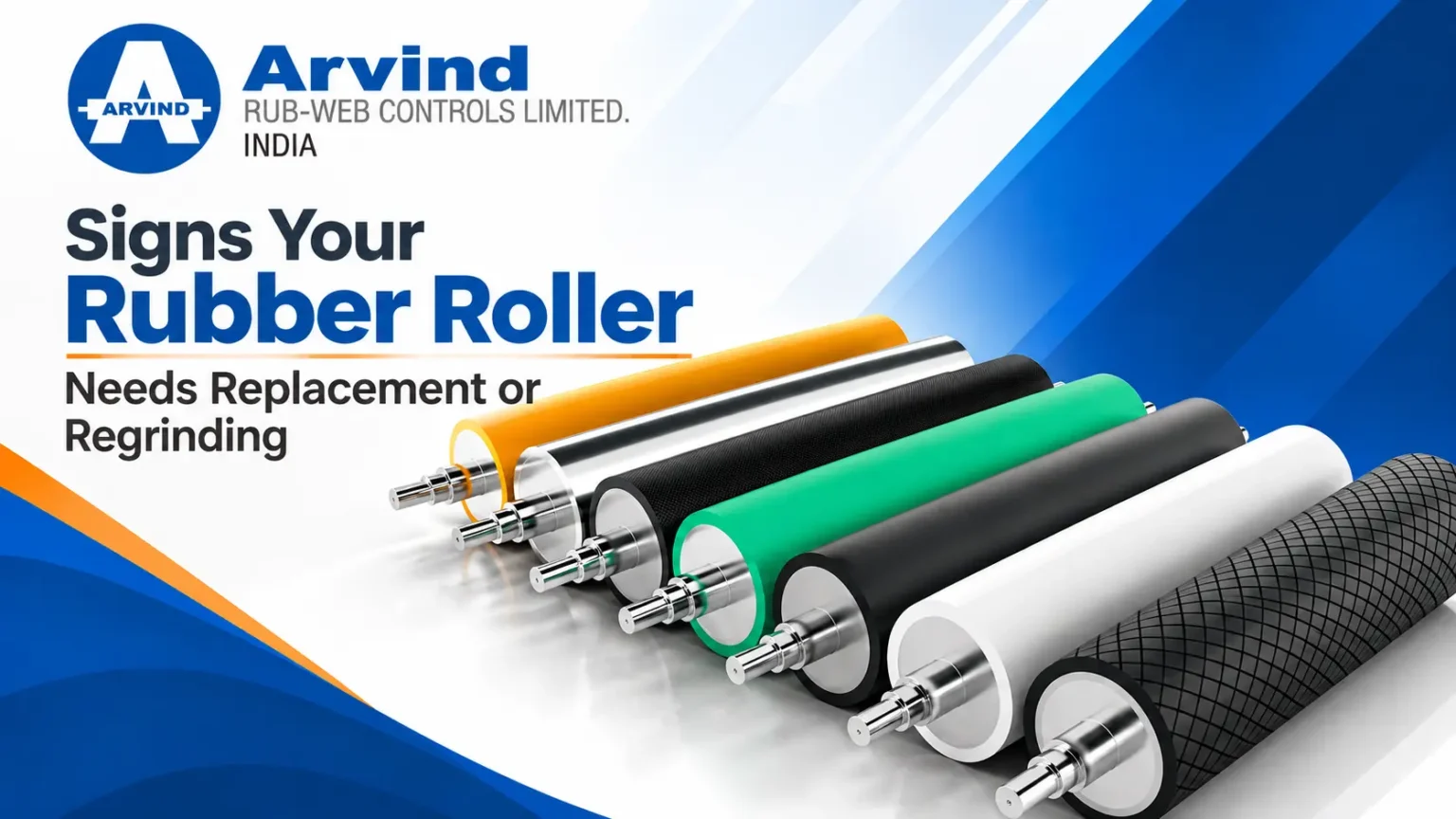
A rubber roller rarely fails without warning. Long before it stops the line completely, it starts telling you something is wrong — through vibration, uneven print, drifting webs, or a surface that just doesn’t feel the way it used to. The trouble is, most plants only notice these signals after they’ve already cost hours of downtime or a batch of rejected material.
Knowing what to look for, and when to call in rubber roller manufacturers for a regrind versus a full replacement, can save you both money and unplanned stoppages. This guide walks through the nine most reliable warning signs, and how to decide which fix your roller actually needs.
Why Roller Condition Matters More Than Roller Age
It’s tempting to schedule roller maintenance by the calendar — replace every two years, regrind every six months. But duty cycle, not time, is what wears a roller down. A lightly loaded idler roller can run for years without issue, while a high-speed nip roller in a hot, chemically active process may need attention within months.
That’s why the smartest approach isn’t a fixed schedule — it’s recognising the physical signs of wear early enough to act before they affect product quality or damage adjacent components like bearings, shafts, or the mating roller.
9 Signs Your Rubber Roller Needs Attention
- Visible Cracking or Surface Checking
Fine cracks — often called “checking” — appear when the rubber compound loses flexibility due to heat, ozone exposure, or age. Once cracking starts, it spreads quickly under continued flexing, and the roller can shed rubber particles into your product. This is one of the clearest signs that regrinding won’t be enough; the compound itself has degraded.
- Glazing or a Shiny, Hardened Surface
A glazed surface — smooth, shiny, and noticeably harder than the rest of the roller — usually comes from friction heat or chemical exposure. Glazing reduces grip and nip pressure consistency, which shows up as slippage, poor ink transfer, or uneven lamination. Light glazing can sometimes be corrected with a regrind; deep glazing usually means the compound has changed structurally and needs recovering.
- Uneven Diameter or Out-of-Round Condition
If you measure the roller at multiple points along its face and get different diameters, or the roller “wobbles” as it rotates, it has gone out-of-round. This is often caused by uneven wear, improper storage, or a bent core. An out-of-round roller creates inconsistent nip pressure across the web — visible as streaking, wrinkling, or thickness variation in the finished product.
- Grooving, Pitting, or Localised Wear Patterns
Repeated contact with the same edge of material, abrasive dust, or a misaligned mating roller can wear a groove into specific sections of the rubber. Once a groove is deep enough to be felt by hand, it will telegraph onto the product surface. Shallow grooving can often be corrected by precision grinding; deeper grooving usually calls for a full recover.
- Loss of Hardness (Softening)
Rubber softens over time as plasticisers migrate out of the compound or as it absorbs oils, solvents, or moisture from the process. A Shore hardness reading noticeably below the original specification means the roller is no longer delivering the nip pressure and rebound it was engineered for — even if it looks visually fine. This is a case where instrumentation, not eyesight, catches the problem first.
- Excessive Vibration or Noise at Operating Speed
Vibration that increases with speed usually points to an out-of-balance roller, often caused by uneven wear or an accumulation of built-up material on one side. Left unaddressed, vibration accelerates bearing wear and can damage the shaft or adjacent machine components — turning a roller problem into a much larger repair bill.
- Chemical Swelling or Softening in Specific Zones
If a roller runs in contact with oils, inks, adhesives, or solvents outside its compound’s resistance range, it can swell or turn tacky in localised areas. This is a compatibility issue, not just wear, and regrinding won’t fix it — the compound itself needs to be reassessed for the application before recovering.
- Drift, Wander, or Tracking Issues in the Web
If the web consistently drifts to one side despite correct guide settings, an out-of-round or tapered roller is a common hidden cause. Because tracking problems are often blamed on guides or tension control first, roller geometry is frequently the last thing checked — and the actual root cause.
- Visible Loss of Rubber Thickness
Every regrind removes a small layer of rubber to restore a true, smooth surface. Eventually, there isn’t enough covering left to grind without exposing the core or compromising the roller’s structural integrity. At this point, regrinding is no longer an option, and the roller needs a full recover or replacement.
Regrind or Replace? A Quick Comparison
|
Condition |
Regrinding Usually Works |
Replacement / Recover Needed |
|
Surface cracking |
No |
Yes |
|
Glazing |
Light glazing only |
Deep glazing |
|
Out-of-round |
Yes, if within tolerance |
No, if core is bent |
|
Grooving |
Shallow grooves |
Deep grooves |
|
Hardness loss |
No |
Yes |
|
Vibration |
Sometimes (rebalancing) |
If core damage present |
|
Chemical swelling |
No |
Yes |
|
Remaining rubber thickness |
Adequate margin left |
Minimal margin left |
Use this as a starting point for a conversation with your supplier, not a final verdict — an experienced technician inspecting the roller in person will always give a more reliable answer than a visual checklist alone.
Why This Decision Is Best Left to Experienced Rubber Roller Manufacturers
Diagnosing wear correctly requires more than a visual check. Established rubber roller manufacturers use hardness testers, dial indicators for run-out, and experience across hundreds of similar applications to tell the difference between a roller that needs a quick regrind and one that needs a full recover. Getting this call wrong in either direction is costly: regrinding a roller that actually needs recovering wastes time and still fails in weeks, while replacing a roller that only needed a regrind is an unnecessary expense.
A good manufacturer will also check the core, journals, and bearing seats during inspection — because a perfectly good recover on a bent or worn core will underperform regardless of how well the rubber itself is finished.
When to Call for an Inspection
As a general rule, schedule an inspection if you notice any two of the signs above occurring together, or if product quality has changed without any other process variable changing. Waiting for a complete failure almost always costs more than a planned regrind or recover — both in downtime and in scrapped material.
Arvind Rub-Web Controls Ltd has been manufacturing and re-covering engineered rubber rollers in Ahmedabad since 1984, serving flexible packaging, printing, lamination, paper, textile, steel, tyre and plywood plants across India and in more than 50 countries. |
Frequently Asked Questions
How do I know if my roller needs regrinding or a full recover?
Surface-level issues like minor glazing, shallow grooving, or a small amount of out-of-round condition can usually be corrected by regrinding, as long as enough rubber thickness remains. Deeper issues — cracking, hardness loss, chemical swelling, or minimal remaining rubber — require a full recover instead.
How often should rubber rollers be inspected?
Inspection frequency should follow duty cycle, not a fixed calendar. High-speed, high-temperature, or chemically exposed rollers should be checked more frequently than lightly loaded idler rollers. A quarterly visual and hardness check is a reasonable starting point for most industrial lines.
Can a roller be reground multiple times?
Yes, as long as sufficient rubber wall thickness remains after each grind. Most rollers are specified with some extra thickness precisely to allow for a few regrinding cycles over their service life. A supplier can confirm remaining margin during inspection.
Does vibration always mean the roller needs replacing?
Not necessarily. Vibration is often caused by imbalance from uneven wear, which can sometimes be corrected through regrinding and rebalancing. However, if the core itself is bent or damaged, vibration will persist even after resurfacing, and replacement becomes necessary.